bodybendot
Showing posts with label Stargardt's Disease. Show all posts

Cuts and burns crossed out


I miss a step a little too often, I bump into things (sometimes electric poles), cuts and bruises are a norm. The day is not far when they will be convinced that I suffer from some self-injury disorder or DSH.

Partial vision is not easy to live with. You think you can see when you actually cannot.

I recently purchased cut and heat resistant gloves, something similar to these (Kevlar knit gloves). I highly recommend them. They are not bulky and very useful for everyday kitchen work. A little difficult to clean though.


Read more »»  

Teaching again

After several days of hesitation, I've finally started conducting French language classes at work. Teaching was one of the first things that I ticked off my list when I started to lose my eyesight. It seemed impossible to conduct sessions when I myself cannot read what anyone will write. Eye contact is out of question.

First day of class and I couldn't help getting overwhelmed with the positive feedback I got from everyone from my batch. I used presentation slides and a notepad instead of traditional whiteboard. Used PPT pen to highlight, underline, draw (all those useless hours spent drawing in paint finally came to some good). Took a lot of time in creating slides out of the lesson plans, scanning worksheets etc., but it ensured that everything is one place and in order.

Have delivered six successful sessions. Very pleased that teaching still remains possible and as interesting as ever.  Are you also a visually impaired teacher? What methods of teaching do you use to conduct your classes?
Read more »»  

Alkeus to start clincal trials for SD later this year or start of 2013

Another pharmaceutical company dedicated to finding a cure for Stargardt's Disease will start their clinical trials later this year or in 2013. Alkeus research is more focused on a preventive treatment, with an aim of developing compounds to  prevent formation of toxic A2E and lipofuscin pigments, and thus to slow down macular degeneration. Currently, they are finding patients for their clinical trials. You can add yourself to their registry to get future updates on trials.

http://www.alkeus.com/starstudy2.html

Excerpt of a comprehensive article from their website:

Plant 1
The retina is the thin membrane located at the back of the eye. It contains millions of photoreceptors used for vision, and plays a similar role as the light sensitive film at the back of a camera. These specialized receptors cover the retina and are responsible for black and white (rods) and for colored vision (cones). Vitamin A, which can be found on the tip of the photoreceptors, is the key molecule to vision. Its exact role was explicited by George Wald and resulted in a Nobel Prize of 1967. In other words, vitamin A is the fuel of vision.
Vitamin A and its derivatives (such as beta-carotene), originate from certain types of food: for example, eggs, milk and other dairy products all contain vitamin A while vegetables, fruits, carrots, etc. contain beta-carotene. After vitamin A is transported into the retina, it is struck by light forcing it to change its molecular shape, and acting like an electrical switch which enables the delivery of an electric signal to the brain. This signals the presence of light to the brain.
After vitamin A has changed its shape, it becomes insensitive to light and needs to be reactivated by specialized cells, the retinal pigmented epithelium (RPE). The geometric switch of vitamin A as well as its recycling by the RPE is called the "visual cycle".
While we would wish vitamin A to be a clean burning fuel, unfortunately, the visual cycle is imperfect and some vitamin A molecules are able to escape the recycling system: these vitamin A can then bind to other vitamin A molecules and create toxic aggregates of vitamin A called vitamin A dimers (or A2E). A2E is then absorbed and stored in the RPE cells where they are considered to be responsible for the formation of other toxic granules named lipofuscin.
With age, accumulation of lipofuscin reduces the proper function of the RPE cells and is thought to be partly responsible for inducing macular degeneration.
Stargardt disease patients present a defective gene which prevents proper transport of vitamin A back into the RPE, which results in even faster formation and accumulation of A2E and lipofuscin. This is why Stargardt disease is also called "juvenile macular degeneration" as the clinical presentations may be somehow similar.
Visual cycle imperfections lead to A2E formation and to macular degeneration. Alkeus Pharmaceuticals is developing compounds that can help perfect this cycle, prevent the formation of toxic A2E and lipofuscin pigments and potentially slow down vision loss in dry-AMD and Stargardt disease."


Read more »»  

Moving to a new city

Sometimes disability is imposed. Like, there are accessible cities and there are inaccessible cities. Experience is relative still. 

Ever since I arrived in this city 4 years back, I've been uncomfortable. Running in circles and always finding myself back at the starting line. Several change of jobs and relationships. Permanence is perhaps a utopia.

I feel no connection with this culturally inaccessible city. It limits me. It disturbs me. It took me sometime to understand that I need to move to a new place. More than 2 years. And then when I thought I need to move, I found someone. It didn't last long. I live my life from one minute to another (Either it is SD or just me, difficult to disassociate) and this person came with a schedule where I had to fit in or where I couldn't fit in. I'm the kind of person who will skip the world to be with someone for even 10 minutes and he was the kind of person who was too entangled in several worlds. Yet there was an inexplicable connection between us and now we are unrelated. 

I'm free to move to a different city. A city that expands my possibilities. It did take me a while to work things out and finally I got relocation approved from my employer. 

Being visually impaired, I like being in big cities, where people may not be monitoring your every move. I can get lost without looking stupid. I can look up and someone will guide me home. (And not be embarassed to ask 20 people for directions, within just a mile!. With more than 20,000 people per square kilometer to ask for help, I do not need a map). I can walk in crowded streets incognito. Be led by the pace of the city and find several things to do. And when I get tired of the world, find a pretty spot to renew my morale and spirit. I can depend on the city. 

Even though it will take a month or two to actually move, I'm already excited and feel less disabled :o)

Read more »»  

Reading problems

Finished reading La carte et le m�moire  (Michel Houellebecq) and Cosmicomics (Italo Calvino) - around 600 pages over 3 weeks, in office shuttle, caf�s. Had sore eyes as a result. This month was exceptionally hectic even at work with a huge volume of translations and tight deadlines.


I find I move between reading and non-reading phases all the time. As continuous reading always results in sore eyes and/or discomfort, i really avoid reading. And then when it has been too long (say a month or two), I pick up again a book and try to finish it.

I'm still not used to text-to-speech. It sounds too odd and kills any pleasure whatsoever of reading. Audio books are alright, but the experience is completely different. Perhaps reading is irreplaceable. Text-to-speech fails with fiction and complex non-fiction books.

As a possible solution, I'm thinking of buying a compatible refreshable braille display. My reading speed is better with braille and it would not involve any reading stress. But braille displays are very expensive currently, between $2500 - $8000. Several projects for developing an affordable refreshable Braille display are going on. Once in the market, the retail price will be around $300 for these displays (For e.g., Quixote, by Bristol Braille). These new displays are expected to be available by the end of 2012. I will wait for few months.

Do you use a refreshable Braille display for reading? Any suggestions?

Read more »»  

Interpreting disappointments

Stargardt's has defined my choices in life. It has also defined other people's choices about me.  Every day I face a  prejudiced world, a world that only understands "normal", that often tries to weigh me down with its distorted perspectives and its coloured opinions.


Most of the days I can easily shrug them off, but sometimes they settle deep. Some I manage to remove over time, but some just linger like so many other things in life.


I could have finished my Ph.D in French literature some years back, had the doctors not told me to stop to read.


I would have not lost a relstionship, had they not disabled me in their imagination. We were not left any choice. I've still not been able to deal with that empty space.


...


There are other things that lie beneath. Things that we think we are comfortable with. But we forget the dimension of time. We forget that everything evolves, even the past.


Some people say they have become comfortable with Stargardt's. Am I comfortable with Stargardt's? I don't know. I'm not even sure what is the right answer. Acceptannce and being comfortable are two different things.


Discomfort can be positive. Like an exercise in reverse. It can thrust you forward to force you find a way. If people act as mirrors and if we are constantly trying to adjust our reflections to their mirrors, perhaps I constantly adjust my life to not be that reflection. Because their reflections are all "normal". And I'm a different person.

Read more »»  

All about Pens

I used to like sending postcards to my friends. Now it is almost impossible to decipher what I write. There was a time when writing was the only way to self-discovery.


These days I try to avoid writing. I take my laptop for meetings instead of a paper and a pen. I take notes on my phone or PC. Yet there are situations when the use of a pen really cannot be avoided. Then, I find I must avoid cursive writing if I want to read it. 

Recently, a fourth grade student designed a pen  for visually impaired children to better recognize shapes and letters. And just out of a small spool of yarn, paper clip and a paper cup attached to a hollowed out pen! 

I thought I'll do a post on two pen systems for low vision which might be useful for different people depending on their needs.

PenFriend - RNIB's voice labeling system, PenFriend,  has been there since some time now and still very useful for both low vision and the blind. You can record your voice onto dime sized self-adhesive labels that you can stick on any household objects. And then touch it again with the pen and listen to the label/note. Unlike the demo video, I can still distinguish between a can of tomatoes and a can of beans. I really liked the idea about voice labels on medicines. Especially I find it difficult to read the expiry dates and sometimes I don't know what I'm popping has long expired. It can be useful for prescriptions and labeling important documents and posts which are unreadable.  These stickers can also be used as tiny reminders or notes that I can stick on pretty much everything and anywhere.It comes with a 70 hour of recording time and you can also download mp3 and audiobooks on it from your PC. PenFriend is available over Amazon for $125 and comes with 125 labels. Extra labels would need to be purchased. A pack of 381 labels is for $30.


Livescribe Echo SmartPen - This is more of a recorder pen that lets you record everything you hear,say or write. Add voice notes to handwritten notes and convert these handwritten notes to digital by using an app. Just like the SmartPen labels, Livescribe also requires a Livescribe paper which has a pattern of dots that enables to recognize and record pen writing movements. A very useful device for those who do not use or carry around their iPad or iPhone, in a classroom or in a meeting or for maintaining an agenda or a diary. It is priced at $134 for a 4GB Echo SmartPen. Livescribe claims that the special compatible paper can be printed but most reviewers seem to contradict this point. Lot of people have also complained that the handwriting recognition app MyScript doesn't recognize correctly even the clearest of handwriting. And if you need to record or write a lot, the cost of paper will soon add up to be more than the cost of a smartphone or an accessible all purpose tablet. 


Read more »»  

Intelligent screen readers ?

It is getting difficult for me to translate these days. For some reasons, full view magnification is no more working on my Windows 7 PC at work. I tried testing several third party accessibility software but I'm yet to find a screen reader which automatically recognizes and switches between two languages on the same page. 

I have to work on a translation tool whose interface is similar to this image. Source text is on the right side and I type on the left side in target segments. I need a reader which can recognize both French and English and swap between the two when I move my cursor from one segment to another. 


Does anyone know any intelligent screen reader tool which can solve this issue? 


I currently work with 200% magnification but I would like to use more and more of screen reader technology if I can to avoid strain. 


Update - Tried ZoomText 10. Nice upgrade from v9. Reader still supports only the language selected during installation. It is still not bilingual, Looks like either I need to adapt to how a tool reads French in English accent or just drop the idea of a Reader completely! :(

Read more »»  

Mistrust

It is always difficult to convince people that we are visually impaired. They look at me and see a healthy young woman who can look at them in the eye at an arm's length. And they think I'm just fabricating stories about SD to get a seat in the front row.


I was late for a theatre performance today and they sent me to the show organisers to check for a front row seat. I had to explain to the director for 15 minutes before he was partially convinced. He kept staring at my eyes. I felt very uncomfortable and I didn't want to speak anymore. I went inside and requested some people in the front row to give me a seat (this time I didn't tell them I'm visually impaired). And I got a seat! 


What do you do in such situations when people refuse to help you because they don't trust you that you are visually impaired? 


Read more »»  

Second Patient with AMD treated safely in Stem Cell Clinical Trials

Good News! Advanced Cell Technology Inc. announced treatment of a second patient with  dry age-related macular degeneration (AMD). In a press release, Gary Rabin, chairman and CEO of the company said that the patient is recovering well:  �So far, there have not been any complications or side effects due to the stem cell-derived RPE cells, and we will continue monitoring the patients for safety, tolerability and efficacy of this therapy,� 

The clinical trials are designed to determine the safety and effects of sub-retinal implantation of retinal pigment epithelial (RPE)  cells derived from human embroynic stem cells. ACT trials are one of the four ongoing clinical trials for the treatment of age-related macular dystrophy and Stargardt's macular dystrophy.

Earlier in January, ACT announced safe stem cell transplantation treatment of first patients. Currently, the company is conducting three trials in United States and Europe. Each trial will have 12 people, who will be monitored for safety and tolerability of hESC-derived RPE cells at 12 months.


Read more »»  

Google's New Context-based Spell check

Google will soon roll out their new context-based spell check integrated in their browser Chrome. It might be a big relief for people with dyslexia or low vision as it analyzes the context to recommend correct spellings

So if you wrote "Icland is an icland". It will suggest "Iceland is an island". So totally cool!  Here is a link for more details : Smart Spell Check


Update: For Chrome users, a grammar and spell check Ginger extension can be downloaded from here


Read more »»  

Saffron supplementation

I've been hearing about the good properties of Saffron and its use in arresting macular degeneration since quite some time now (2008). There is a clinical trial being currently conducted in Italy on people with Stargardt's and the results will be out by July 2012. It seems that saffron does help to reverse or stop degeneration at an early staage of AMD. There is no evidence yet for its application on SD. Minimum dosage recommended is 20 mg per day.

Saffron is seemingly a very good anti-oxidant for eyes. It also has some side-effects and you should check your doctor before taking saffron supplements. Saffron is commonly used as a spice in India and I know that if you consume even two three tiny threads, you end up having hot flushes.

Here is the link to SD related clinical trial for this: Saffron supplementation in Stargardt's Disease


Stem-cell and gene therapy trials are also in Phase 1. But it will take some more years to really understand if they are safe or not.


Read more »»  

Self-defense techniques

Last weekend I enrolled myself for jiu jitsu training at a combat sports academy nearby. With more vision loss, I feel I've very less preparation time if I'm attacked in the street. And I may or may not be able to run. Some people suggested using a folded white cane or pepper spray as self-defense measure but where is the time?


After a lot of research on which type of martial arts to choose, most of my SD friends recommended Jiu-Jitsu as it is more about using technique than muscle power. I like the idea. And I'm already very excited thinking about all the moves that I read about and watched online. 


I've told my instructors that I'm visually impaired and they might need to adapt the classes according to my needs. I start in 2 weeks! 


What kind of self-defense training works best for you?


Read more »»  

Another Interesting Portable Electronic Magnifier


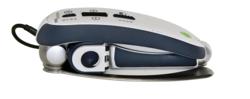
Enhanced vision has launched Transformer, a portable USB magnifier that can be easily connected to a laptop, monitor or LCD. It has a 330 degree rotating camera which captures the image and reproduces the text on your device in your selected font/ background colour. It provides upto 30x magnification and 28 custom preselect colour modes.

Here is more information: 

Price is not listed on their website but I feel it will be expensive. All products by Enhanced Vision are unfortunately very expensive. 


Read more »»  

Using a white cane

I fell from stairs today. I wish I could use a cane. But in India, this is not an option. I would get mugged and I don't know what else if others know I'm vulnerable.

Mostly I don't have problems, but at night, I find it difficult to guage surface changes on road. I've not yet stopped running in the evening though. But I am thinking of moving my running schedule to early morning.

Another thing which has been bothering me off late is self-defense. If I can't see what is coming, difficult to defend myself. I'm going to check this weekend for any self-defense training course if available nearby. Worse case I will order a pepper spray. 

For those of you who can use a cane, here is a "how to" video on Cane Travel


Read more »»  

Ice-pick headaches

Does anyone else has eye-pick headaches? I get them 4-5 times in a year, a sharp sensation of pain descending from top of my head to my eyes. It just blinds me for few seconds and after that I'm okay.

I have noticed always a loss of vision after a series of these attacks. I'm yet not sure though if it is related to SD. Earlier I used to think it might be a result of hypertension. But I ma not hypertensive since past 1 year and yet I feel these attacks.

Do you experience something similar?


Read more »»  

And there is hope! Embryonic stem cell trials safe.

Advanced Cell Technology, Inc. (ACT) has reported vision improvement in the first patients that underwent embryonic stem cell treatment. The surgery has appeared safe after 4 months.


Detailed article here - http://www.nhs.uk/news/2012/01January/Pages/embyonic-stem-cell-trial-macular-degeneration.aspx


Stem cell therapy 'safe for eye condition'


A groundbreaking stem cell trial offers hope for millions with progressive conditions that end in sight loss, the Daily Mail has today reported. The high profile study was covered in different ways by news sources, with The Independent going as far to say patients had been �cured� by a stem cell �miracle�.
The news is based on a small but important clinical trial that tested the safety of using human embryonic stem cells. The trial treated two people with progressive eye conditions affecting the macula, the part of the eye responsible for central vision. One patient had age-related macular degeneration, a common cause of visual loss in older adults. The other patient had Stargardt�s macular dystrophy, a rare hereditary disease that causes macular degeneration in adolescence. Both patients had end-stage disease with severe central vision loss.
In the study researchers developed stem cells into cell types found within the eye and carefully injected the cells into specific locations within the eye. After monitoring patients for four months the researchers found that neither patient had problems with abnormal cell growth, tumours, graft rejection or other safety issues. They also reported improvements in their vision, although not complete reversal of their conditions.
While certainly impressive, this small trial was designed to help establish the safety of the procedure, not whether it was effective. As such it helps support the safety of the treatment but it is far too early to declare the treatment as a �cure� for blindness.

Where did the story come from?

The study was carried out by researchers from The University of California and the biotechnology company, Advanced Cell Technology in the US. The study was published in the peer-reviewed medical journal The Lancet.
BBC News reported this research well, highlighting that it was a small, preliminary safety study and that further follow-up is needed. The Independent�s headline was misleading, as this study did not demonstrate that a patient�s blindness was cured. However, within the main body of its article the newspaper made it clear that the study was a small trial to assess safety rather than effectiveness. The Daily Mail also said that it was a safety trial and their reporting was appropriate.

What kind of research was this?

This clinical study looked at the safety of transplanting human embryonic stem cells into two people with different types of eye disease: one person with Stargardt�s macular dystrophy and one person with dry age-related macular degeneration.
Age-related macular degeneration (AMD) is an eye condition that affects the macula, which is the central part of the retina found across the back of the eyeball. The macula is responsible for central vision. The condition is most often seen in people over the age of 65, and is the most common cause of visual loss in the developed world.
AMD is usually described as being dry or wet. Dry AMD, as the person in this study had, is the most common and less severe form and means that there is gradual degeneration of the retinal cells. It may or may not lead to complete visual loss. If there is progression to the more severe form, wet AMD, the condition also involves abnormal blood vessels growing within the retina (in an attempt to try and supply blood to the damaged macula). These abnormal vessels are fragile and can swell and bleed into the eye causing considerable damage to the macula and loss of vision over a comparatively short space of time. This study did not include people with wet AMD.
Stargardt�s macular dystrophy is a rare, inherited form of macular degeneration. Progressive vision loss usually starts before the age of 20 years, and as there is currently no available treatment. The condition usually leads to complete loss of central vision at a young age.
Stem cells have the ability to develop into various cell types. In this study the researchers used a type of stem cell derived from human embryonic tissue, which had then been developed into retinal cells. The researchers said that there were potential side effects of using these cells, included the cells dividing in an uncontrolled manner, forming tissue in the wrong position, and causing an immune rejection.
As is normal when developing new treatments, the researchers were carrying out a safety study to make sure the treatment was safe for humans. For their trial they used only one person with Stargardt�s disease and one person with dry AMD. As there were only two people in this study, with no control or comparison group, it is not possible to say how effective this treatment is at this stage. Larger follow-up trials would be needed to determine how effective treatment with this technology actually is.

What did the research involve?

The researchers recruited two people experiencing the end stage of their disease, which had left them with central vision loss but no other eye problems. They also had a cancer-free medical history and were able to undergo the immunosuppression needed for the treatment. They were also judged as psychologically suitable to participate in the first trial of this type involving eye stem cell treatment.
The researchers made human embryonic stem cells develop into retinal cells, using mouse skin cells to grow them on. The researchers then purified the cells so that there were no mouse cells remaining and then selected patches of retinal cells. They had already determined the best way to handle and store these cells in previous experimental work.
The two participants received immunosuppressive treatment the week before their transplant and for an additional 12 weeks. The researchers prepared a 1ml solution containing a known number of the retinal cells. They chose a specific area of the retina on which to inject these cells. Each patient had cells injected into one eye only, which is a common practice for trials of new treatments that could potentially damage the eyes.

What were the basic results?

The researchers were able to make retinal cells that were over 99% pure. As the cells had previously been exposed to animal cells, they tested the cells extensively for any contamination, including animal and human viruses.
They did not see any excessive or abnormal growth of the transplanted cells in either patient or any tumour formation. The transplanted cells were growing in the correct place, except one cell in the patient with Stargardt�s macular dystrophy. However, this cell was not dividing. There was no clinically detectable inflammation in the eyes of either patient and no signs of cataract, glaucoma, retinal detachment or increased pressure in the eye. Neither patient experienced pain or sensitivity to light.
The researchers could see that the cell transplant had survived in the patient with Stargardt�s macular dystrophy, and the amount of pigment in these cells increased from one week after the transplant up until the third month. Pigment is crucial for vision as it allows light entering the eye to be absorbed and converted into signals relayed to the brain.
Both patients showed functional improvement in their sight following treatment, despite not seeing anatomical evidence that the cells had survived in the patient with AMD. The patient with Stargardt�s macular degeneration could only determine hand motions before the treatment but after two weeks could count fingers using their treated eye. Her vision continued to improve over the next three months.

How did the researchers interpret the results?

The researchers say that the therapeutic use of human embryonic stem cells poses daunting challenges but that their results provide clinical evidence suggesting that human embryonic stem cells might safely be transplanted into human patients.
They say that so far, "the cells seem to have transplanted into both patients without abnormal proliferation, tumour formation, graft rejection or any untoward pathological reactions or safety signals". However, they add that continued follow-up and further study is needed.
This study tested the safety of these cells in people who had end-stage dry AMD and Stargardt�s macular degeneration. The researchers said that the ultimate therapeutic goal is to treat people earlier in the hope of increasing the likelihood of being able to safeguard their vision.

Conclusion

This was a small clinical trial that assessed the safety of using stem cell technology to treat one person with Stargardt�s macular dystrophy and one person with dry age-related macular degeneration. Specifically, it looked at the use of retinal cells that had been made from human embryonic stem cells.
The primary focus of this research was to see whether this procedure would be safe, not whether it was effective. The researchers found that neither of the patients had problems with abnormal cell growth, tumour formation, graft rejection or any other pathological reaction or safety issues, all of which are potential problems in this type of treatment.
The researchers followed the patients over four months but say that further follow-up is needed to observe the long-term effects of this treatment.
Although measuring the effectiveness of the treatment � whether it improved vision � was not the main aim of this study, both patients showed some improvement in vision. However, it should not be assumed that the treatment is effective, as it is not possible to say whether these improvements would be sustained in the long term. As only two people were treated, the response of a variety of people with central vision loss would have to be assessed in a larger trial.
This careful research has demonstrated that this type of transplant could be safe in the short term, and paves the way for larger trials under carefully controlled conditions. However, it is far too early to say whether this treatment could be a cure for blindness, as The Independent suggested.


Read more »»  

Disease progression

Vision loss and degeneration cycle varies among people affected with SD. Neither the doctors nor your friends with SD can predict when and how much vision loss you will have. I've met people who lost complete vision at the age of 8. And I've known people who still have not lost their complete central vision at the age of 55.

Irrespective of the vision loss, everyone I know with SD is still able to live independently. With accessibility and other technologies, almost everything is possible today. Try to find out the way out. Never assume the end of the world. It doesn't exist :-)

I know it may not be easy to keep re-aligning your goals and objectives in life at every vision loss. Living at the edge gets sometimestiring. But what are your options? If you don't want to adapt, you will waste yourself and accumulate more regrets. Do not use the logic of the sighted world, do not listen everything what the sighted people tell you or make you believe. Your life is different than their and the rules are not same. I was told by doctors that I will lose vision and I must not choose a profession which involves a lot of reading (academics). I listened to them and did not enroll for PhD. It has been 7 years, I can still read books, with a little discomfort, but I can read! There is technology to help one read (readers, magnifiers). I am preparing to return to academics next year. Everything is possible. Don't give up on yourself! 


Read more »»  

Not trying

Living with low vision I've to every time question myself (not yet the tea spoons. sigh!), if there is a real limitation to a task due to my low vision or if I am not doing anything to get out of my comfort zone? It is easy to deny everything because it is difficult to see. Living in denial is easy, doing something despite the visual challenge means hard work, dealing with your own ego on a daily-basis
(setting up an incompatible, overdemanding timer to every activity. "Calendar: Read 200 pages today." Start. Fail. Whine. Let despair out of its hiding place. Repeat again everyday. Never learn.).

A lot of limitations we impose on ourselves have no basis in reality. Sooner I eliminate these false limitations from my life, better relationship I will have with myself.

I've not used my camera for a long time. I liked watching people, their expressions, capturing the detail. When it started getting difficult, rather than finding a new technique/subject, I simply stopped to take my camera with me. I have charged the batteries and I am going to take it out. And I will try to find new ways of capturing things.  Try and unlearn the "normal" way and adapt to "my" way. Defenestrate the excuses. Create something, even if it means creating distortions. Who said there is just one way of seeing??


Read more »»  

No man's land

I am neither in an able world nor completely in a disable world. Like the characters in Sartre's Huis Clos who assumed hell to be representative of physical pain and torture, I also assumed years ago that the world would eclipse on me at the later stages of Stargardt's.

I can still read books (digital formats with magnification if not paper). I can recognize people by their countenance if not by their faces. I can do almost everything as normal people but I do it differently..

But I didnt know 10 years ago that I will be okay. I always thought of extremes. To learn braille, to find a job where I have to speak more and read less (interpretation), to adapt for some dark world, without colours.Lack of awareness about the diseasae, about adaptation, about LVAs.  

In India, doctors didn't help me. No teachers suggested about extended testing times. I lived with low self-esteem as my performance in exams started to get affected as soon as 9th grade. I didn't understand why I could not complete a paper or why my score in mathematics started to dwindle when I was positive I had made no mistakes. I didn't know then that Iwas "misreading" digits...


I was trying to assimilate my world with the point of view of a sighted person. And that was the big mistake.

If you or someone in your family has just been diagnosed with Stargardt's. Don't panic.  First step, find out what you are dealing with. With technological progress, everything is possible today. Find out which visual aids you can use. Try to meet or connect with people with SD who can help you with adaptation tricks that they learnt over time from experience. Make a list of do's and don'ts with the help of your vision counsellor. Living with Stargardt's is like living the same world differently. Everything is possible but the rules of sighted world do not apply. So, second step is to unlearn to see things from a sighted person's perspective. We panic because we have always been taught to understad sighted world as normal world and everything else is an anomaly. You need to unlearn this and start to learn the tricks and ways of being in a different world. Everything is still possible in that world but different.

I'm legally blind. And I have a normal job where I perform better than my "normal" colleagues. And soon when I am ready I will complete my Ph.D in French Literature. There are no real limitations in any of the day-to-day activities. Only limitation sometimes is unawareness.


Read more »»